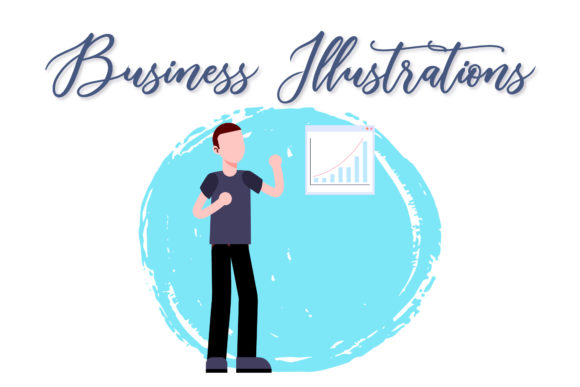
Business Illustrations People Character Review
As a designer who has spent years navigating the gap between digital art and physical thread, I approach every new asset with a critical eye. When I first encountered Business Illustrations People Character, my initial reaction was to assess its potential for real-world application rather than just admiring it on a screen. In the world of machine embroidery design, a beautiful graphic is only half the battle; the other half is ensuring it translates cleanly into a stitched finished product. This collection of Graphics promises versatility, but does it hold up under the scrutiny of a professional hoop?
First Impressions: Mood and Visual Personality
The immediate visual impact of Business Illustrations People Character is one of modern professionalism mixed with approachable warmth. The shapes are clean, avoiding the chaotic clutter that often plagues character-based designs. For an Etsy seller or a small shop owner looking to brand their merchandise, this clarity is vital. The layout suggests a narrative without overwhelming the viewer, making it ideal for custom apparel where readability from a distance matters.
However, as someone who has digitized countless images, I know that what looks crisp in an AI or EPS file can sometimes struggle when converted to stitches. The line weights here appear balanced, which is promising for fill stitch areas, but the finer details will require careful attention during the digitizing process. If you plan to use these Illustrations for sweatshirt embroidery or tote bag design, the boldness of the characters ensures they won't get lost in the texture of heavy cotton or fleece.
A Real-World Scenario: The Custom Corporate Tote
Let's walk through a specific project to see how this design performs. Imagine you are preparing a run of custom tote bags for a local co-working space. You want something that says "community" and "collaboration" without being overly corporate. You select a figure from Business Illustrations People Character depicting two people shaking hands or collaborating over a desk.
When I visualize this on a 10x10 inch canvas, the design fits perfectly. The stitch density seems manageable, meaning you won't have issues with puckering on the thick canvas material of a tote bag. Using a medium-weight stabilizer would likely be sufficient to keep the edges sharp. The result? A high-quality handmade product that feels premium. Customers holding these bags become walking advertisements, and the clear lines of the character ensure the message lands effectively even after multiple washes.
Conversely, if you were to attempt this same design on a delicate baby onesie, you might face challenges. The sheer scale of the original canvas size (1920 px X 1280 px) implies a level of detail that could become muddy if scaled down too aggressively. For baby embroidery, you would need to simplify the vector paths or opt for a smaller, more isolated element from the set to maintain clarity.
Navigating Fabric and Hoop Constraints
One of the most common pitfalls for crafters is ignoring the relationship between the design and the fabric. Business Illustrations People Character works exceptionally well on stable fabrics like denim, twill, and structured cotton. However, on stretchy materials like jersey knit or thin silk, the integrity of the character lines could suffer without the right backing.
If you are planning to put this design on a cap, pay close attention to the curvature. The faces and limbs in these Graphics are relatively flat in their composition. On a curved surface, distortion can occur, potentially warping the facial features or body proportions. Always test the design on a scrap piece of the actual fabric first. Check the hoop size compatibility; while the digital file is large, your machine's physical hoop limits how much of the design you can stitch at once. You may need to split the design or reduce the scale significantly.
Furthermore, consider the color palette. These illustrations rely heavily on contrast. If you are embroidering on dark fabric, you will need a white underlay to make the colors pop. Without it, the vibrant hues intended in the digital embroidery file might look dull and muddy against a black sweatshirt. Testing your thread colors against your fabric background is a non-negotiable step before committing to a full production run.
Commercial Viability and Brand Consistency
For the creative entrepreneur or small business owner, consistency is key to building trust. Business Illustrations People Character offers a cohesive style that can unify a product line. Whether you are creating embroidered patches for hats, decorating aprons for a boutique kitchenware line, or adding logos to holiday gifts, the consistent aesthetic helps establish a recognizable brand identity.
This is particularly important for commercial embroidery projects where clients expect a polished look. A poorly executed character design can cheapen the entire garment, leading to returns or negative reviews. By choosing a design with clean lines and defined shapes, you increase the perceived value of your personalized gift or shop merchandise. Clients appreciate when the embroidery looks intentional and professional, not like a rushed afterthought.
Practical Designer Notes for Success
- Test Before You Stitch: Never skip the test run on scrap fabric. It saves money on wasted thread and ruined garments.
- Check Licensing: While the description states the design is easy to edit, always confirm the specific license terms regarding selling finished items versus reselling the digital files themselves.
- Review Stitch Density: If you are digitizing this yourself, watch out for dense areas that might cause fabric puckering, especially on lightweight textiles.
- Mockups Matter: Use printable mockups to visualize how the design looks in black and white or on different colored backgrounds before purchasing thread.
- Stabilizer Selection: Match your stabilizer to the fabric weight. Heavyweight cuts need heavy cutaway stabilizers to support the fill stitch areas of the character.
Final Verdict on Project Suitability
Business Illustrations People Character is a robust asset for designers who understand the nuances of translating vectors to thread. It shines in applications requiring bold, clear imagery such as corporate swag, event merchandise, and branding projects. While it requires some care when adapting to very small scales or highly textured fabrics, its fundamental strength lies in its clean geometry and expressive simplicity.
For the craft business looking to expand into apparel decoration, this collection provides a solid foundation. It allows you to create unique, high-value items that stand out in a crowded market. Just remember that the magic happens in the execution. Take the time to prep your machine, choose the right stabilizer, and respect the limitations of your hoop size. With those precautions in place, these characters will bring life and personality to your next embroidery project.